Project Portfolio

Selected research projects in human-AI interaction, autonomous mobility, and accessibility. Each case study explains the research question, my methods, the evidence, and what the findings mean for design and product decisions.

Scale development Experiments Mixed methods Design guidance
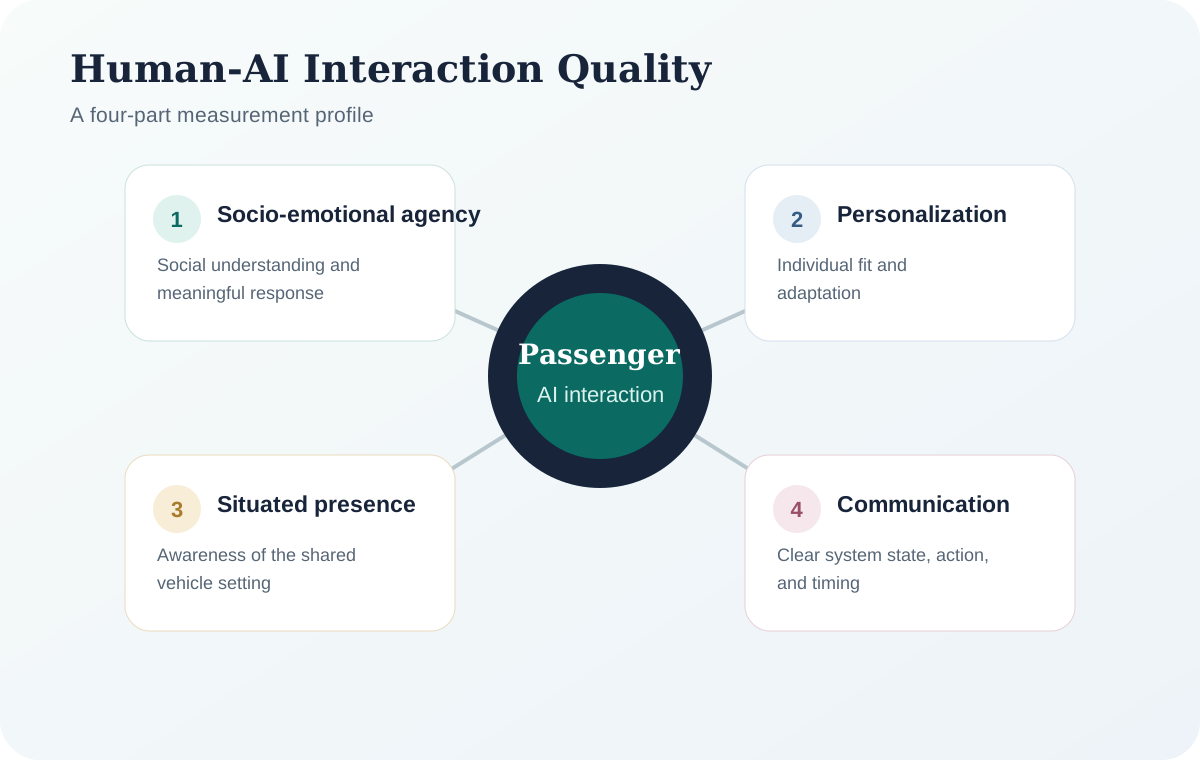
Locked Four-part diagram showing the HEAIQS dimensions of agency, personalization, presence, and communication.
502 participants across scale development and validation

Measurement and UX Metrics

Measuring Human-AI Interaction Quality

Development and initial validation of a scale for measuring how people experience social, personal, situated, and operational qualities of AI interaction.

Methods
Item development, EFA, CFA, 3 x 2 experiment
Participants
502 participants across two independent samples
Data and analysis
42 initial items, 29 final items, four-factor structure
Outcome
Created a structured way to measure distinct qualities of human-AI interaction.
Human-AI interaction Scale development UX measurement Statistical validation
View case study
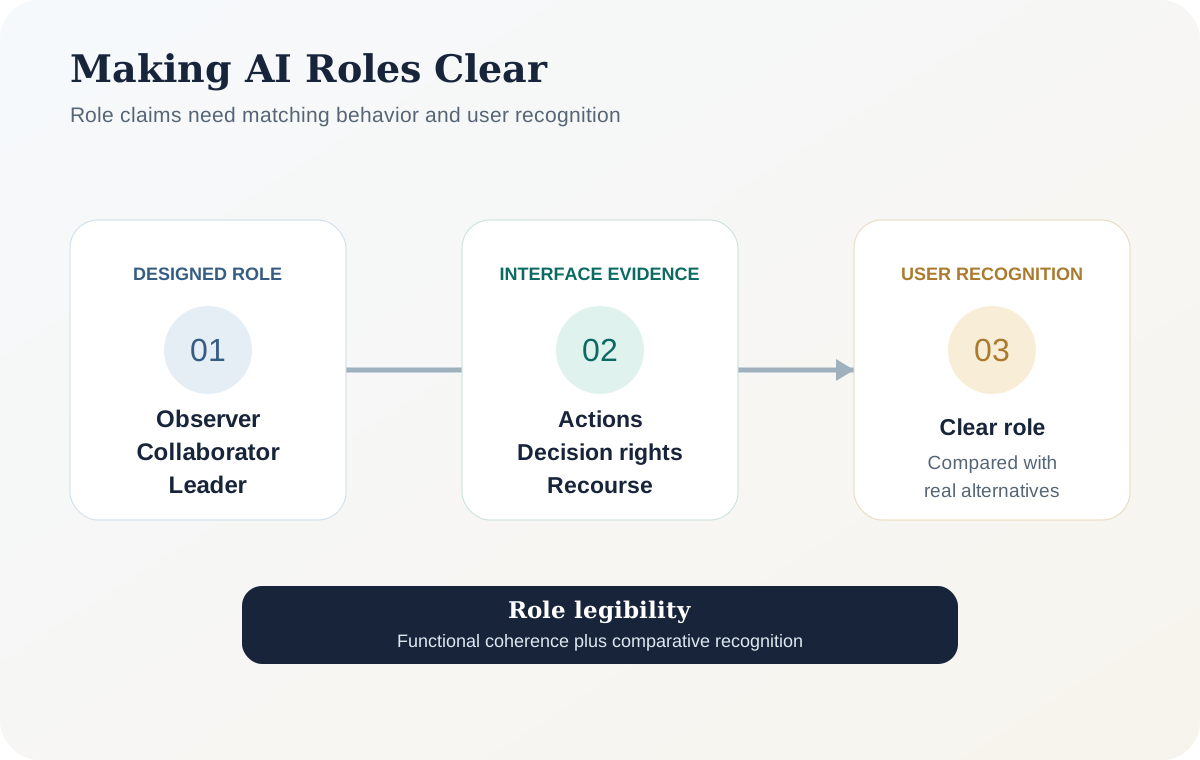
Diagram showing the path from designed AI role to interface behavior and user recognition.
498 participants evaluating observer, collaborator, and leader roles

AI Role and Interaction Study

Making AI Roles Clear to Users

Experiment and measurement audit examining whether people recognize an AI system as an observer, collaborator, or leader.

Methods
3 x 3 experiment, comparative ratings, profile analysis
Participants
498 participants across nine interface conditions
Data and analysis
Direct role contrasts, sensitivity analysis, held-out prediction
Outcome
Created a practical way to test whether an intended AI role is clear to users.
Human-AI interaction Role clarity Experiment design User differences
View case study
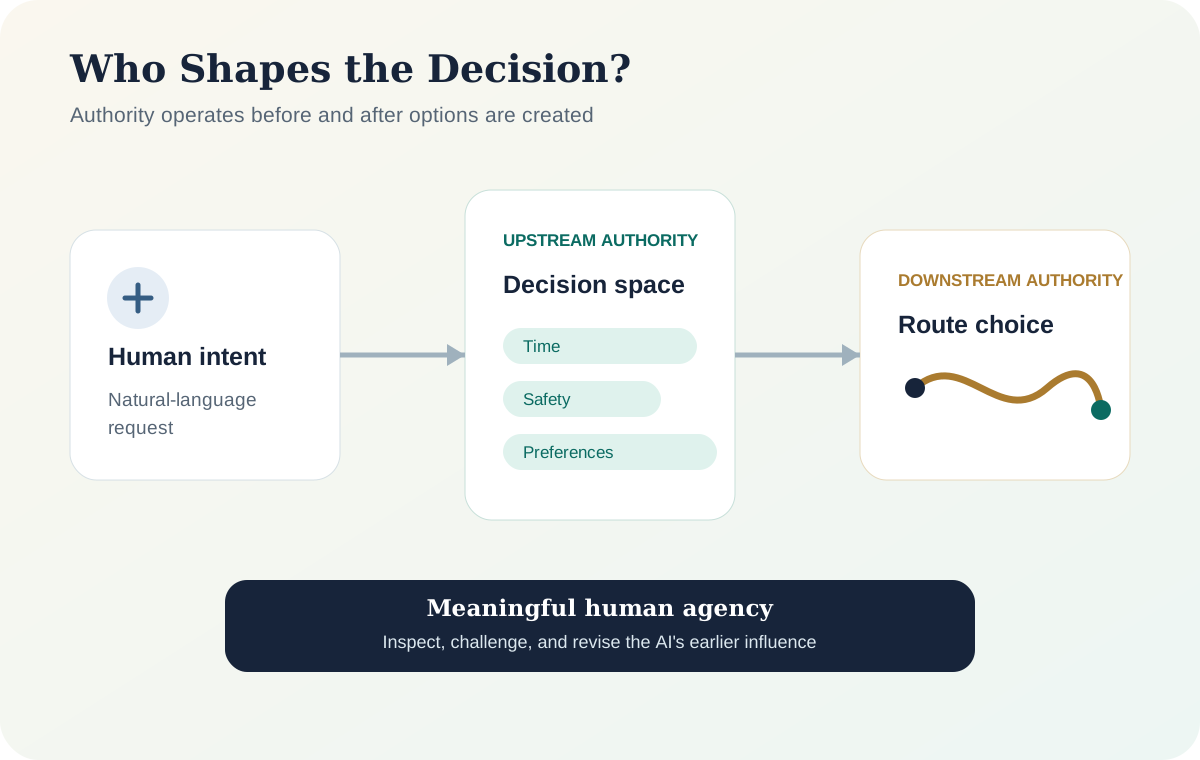
Locked Diagram showing upstream and downstream authority in an AI-assisted route decision.
3 studies combining experiments and interviews

Generative AI Decision Research

Who Shapes an AI-Assisted Decision?

Mixed-methods research on how AI can influence both the options people see and the choices they make in a generative decision interface.

Methods
Prototype, two experiments, semi-structured interviews
Participants
229 participants across three connected studies
Data and analysis
Decision paths, route outcomes, scale data, thematic analysis
Outcome
Showed why final control alone does not explain human agency in AI-assisted decisions.
Generative AI Decision making Mixed methods Human agency
View case study
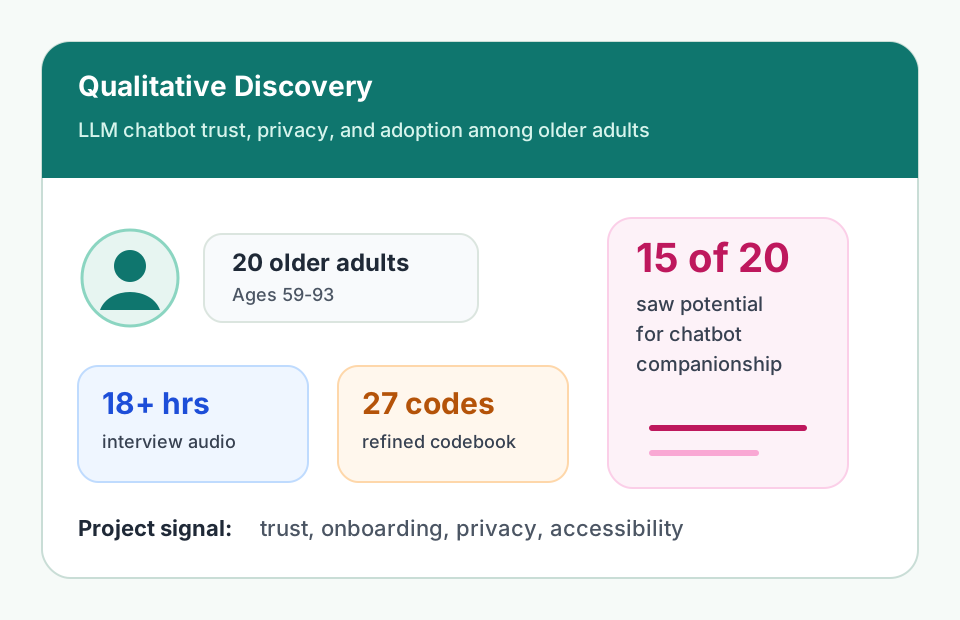
Thumbnail summarizing a qualitative LLM chatbot project with 20 older adults on trust, privacy, and adoption.
20 older-adult contextual interviews, ages 59-93

Generative AI User Research

How Older Adults Evaluate AI Chatbots

Interview study of how older adults judge the usefulness, trust, privacy, and accessibility of AI chatbots.

Methods
Contextual interviews, guided exploration, reflexive thematic analysis
Participants
20 older adults, ages 59-93
Data and analysis
18+ hours of interview audio, 27-code refined codebook
Outcome
Produced product recommendations for trust, privacy, accessibility, and onboarding.
Trust AI literacy Privacy Accessibility
View case study
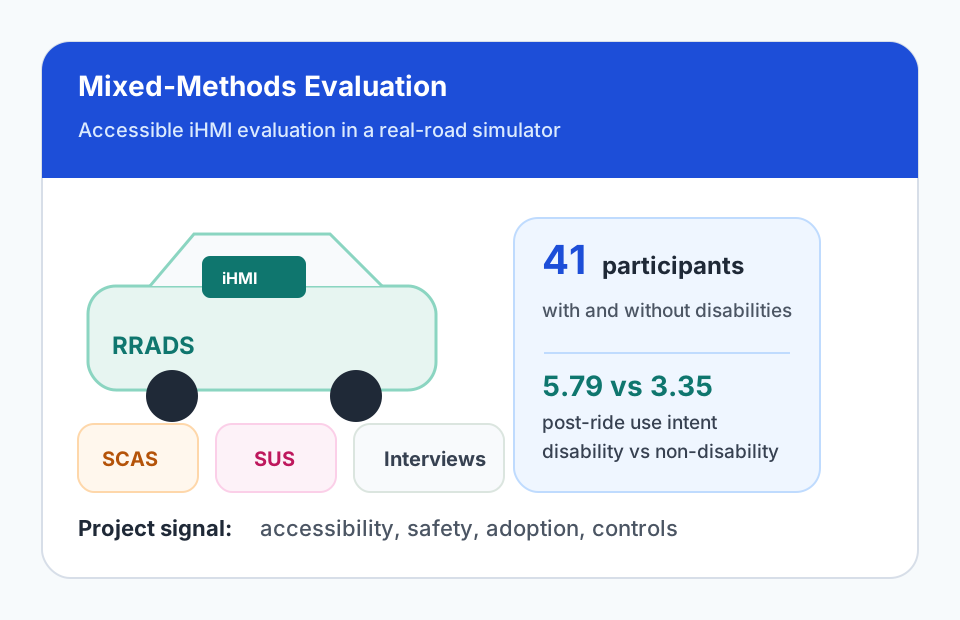
Thumbnail summarizing a mixed-methods autonomous vehicle iHMI evaluation with real-road simulator data and accessibility findings.
41 participants across three U.S. real-road simulation sites

Usability and Accessibility Study

Evaluating an Accessible In-Vehicle Interface

Mixed-methods study of how people with and without disabilities use and evaluate the same in-vehicle interface.

Methods
Real-road simulator, SCAS, SUS, post-ride interviews
Participants
41 participants across disability and non-disability groups
Data and analysis
Pre/post acceptance data, SUS ratings, thematic interview analysis
Outcome
Produced design recommendations for information level, voice interaction, safety feedback, and user control.
Accessibility Autonomous mobility Usability Safety
View case study
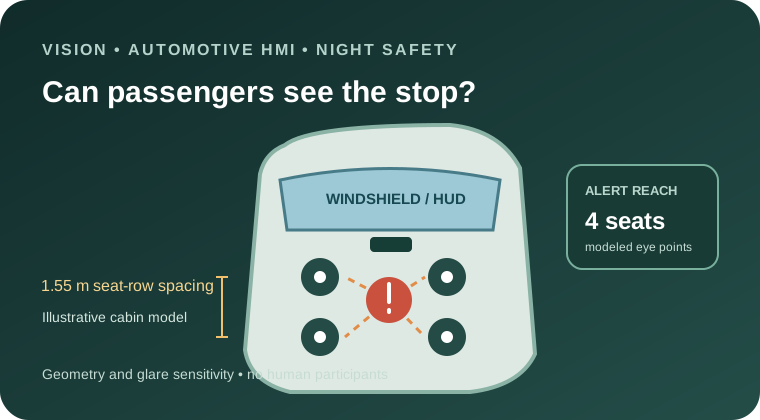
Top view of an autonomous vehicle cabin with front and rear passenger eye points and a highlighted driver HUD zone.
4 illustrative passenger eye points modeled

Vision-Informed AV Safety

Can Passengers See the Stop? Nighttime AV HMI Simulation

Python geometry and glare-sensitivity analysis of how an autonomous vehicle alert may reach front and rear passengers.

Methods
Python geometry model, HUD-distance sweep, luminance sensitivity analysis
Participants
No participants; exploratory simulation only
Data and analysis
Four seat eye points, seven HUD distances, five veiling-luminance inputs
Outcome
Identified rear-row alert reach and night-glare questions for a human study.
Vision and perception Automotive HMI Night visibility Human factors
View case study