
Making AI Roles Clear to Users
AI Roles / User Understanding / Experiment Design
I studied whether people could recognize an AI system's intended role as observer, collaborator, or leader, and why different users interpreted the same interface in different ways.
Project Objective
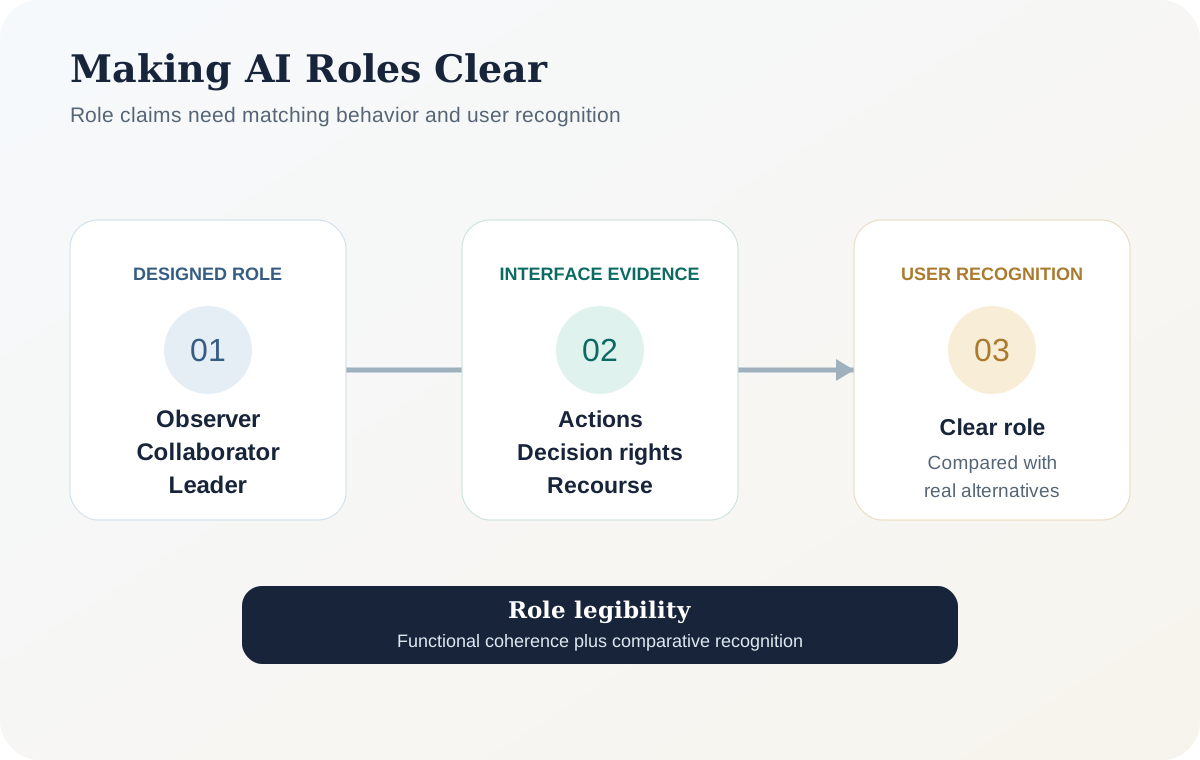
Designers often describe AI as an assistant, collaborator, or leader. A label alone does not establish that role. The system's actions, decision rights, and communication must support the same relationship, and users must be able to recognize it.
The project separated three questions: what role the designer assigned, what role the interface behavior communicated, and what role participants recognized.
Research Timeline
* Approximate active project time from IRB preparation through reporting.
Study Design
Method Alternatives and Choice
Alternative: Rate one assigned role
Asking only whether an interface seemed collaborative would be easy, but a high score would not show whether users saw it as more collaborative than observer-like or leader-like.
Alternative: Treat the label as success
Using the assigned role label as the outcome would confuse design intent with user recognition. It would not test whether interface behavior actually made the role clear.
Alternative: Profile analysis only
Profiles can describe differences between participants, but they cannot by themselves establish that the intended role was recognized across realistic alternatives.
Chosen: Comparative role audit
This was the best fit because each participant rated all three roles. Direct contrasts, sensitivity checks, and profile analysis separated role recognition from individual variation in interpretation.
What Role Legibility Requires
Clear actions
The AI must act in a way that matches the role being claimed.
Matching decision rights
The interface must make clear who can decide, act, approve, or override.
Comparative recognition
Users should rate the intended role above realistic alternatives.
Recourse
Users need a way to respond when the AI's actions do not match their expectations.
Study Figures
Evidence
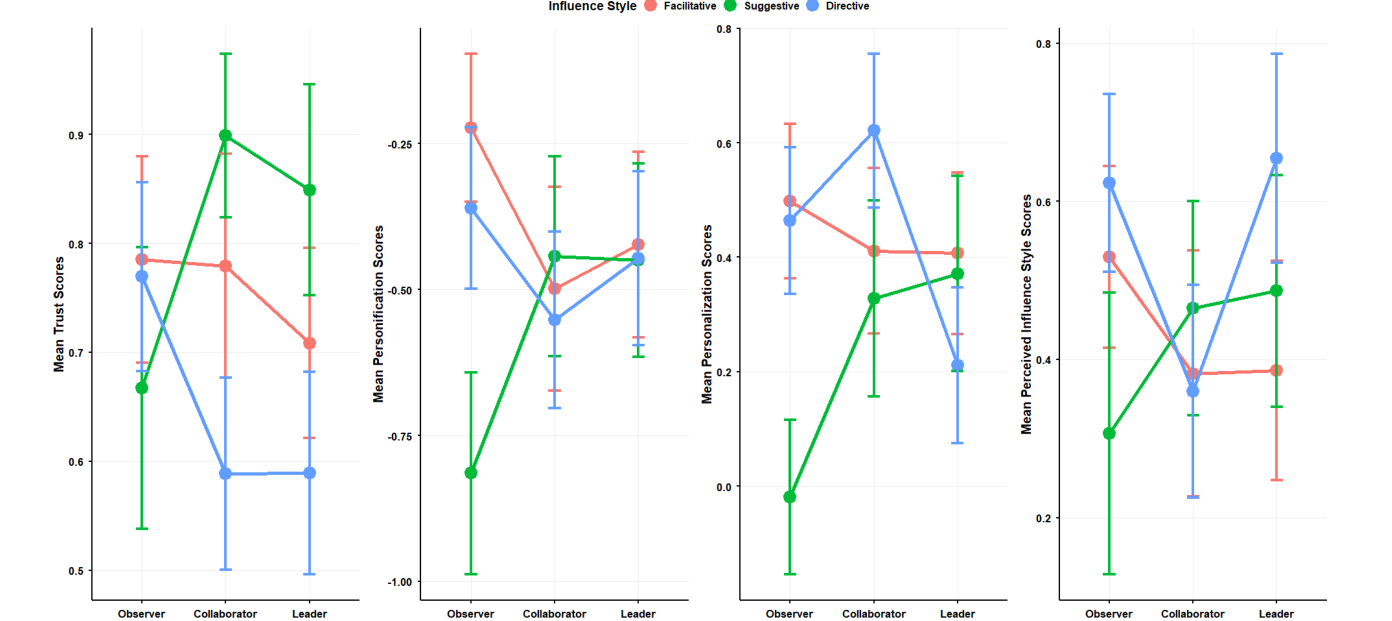
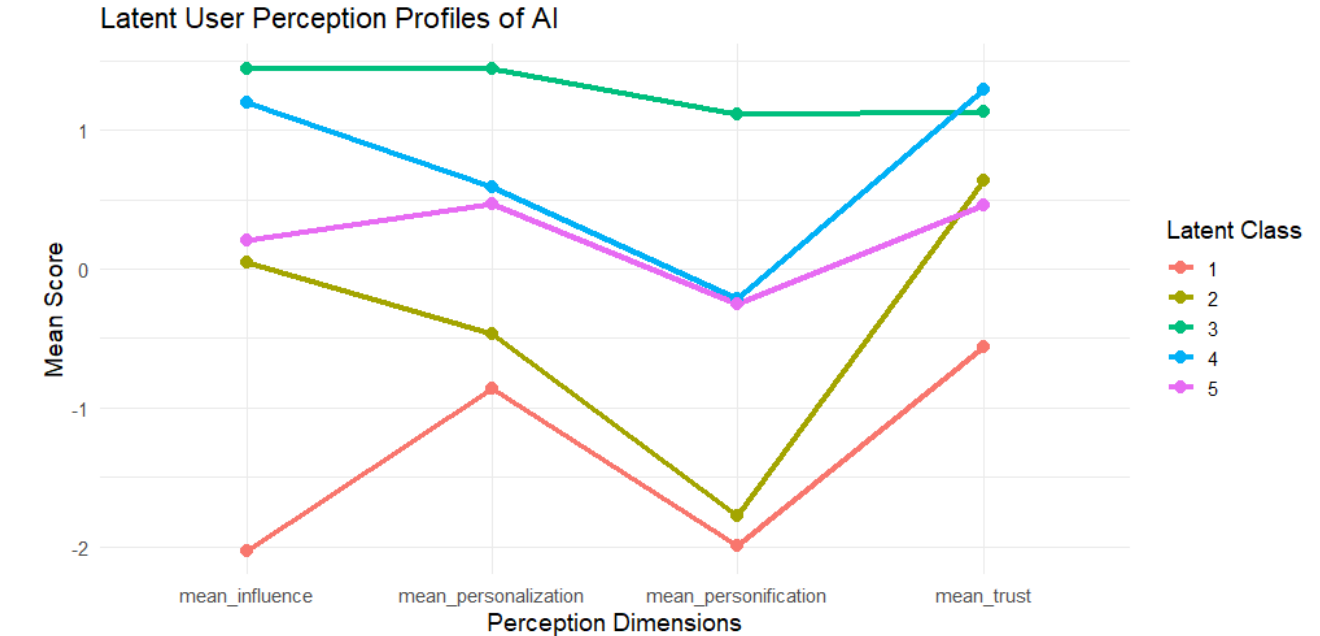
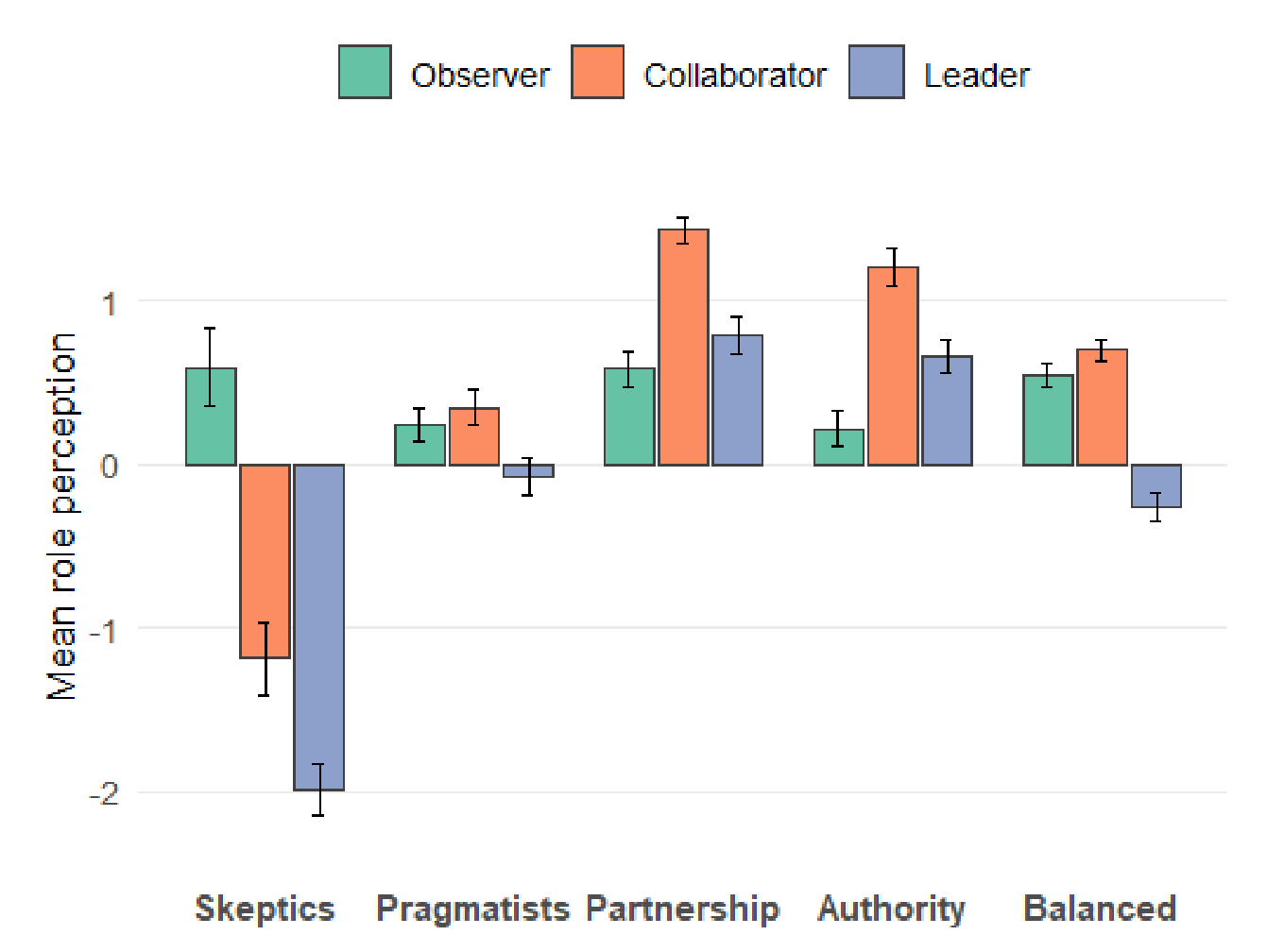
The results showed that differences in user ratings do not automatically mean the intended role was established. A successful role claim needs direct evidence that users recognized the intended role over the alternatives.
Key Insights
Role labels were not enough.
Some messages contained actions or decision rights that did not match the assigned role.
Comparative ratings gave stronger evidence.
Testing the intended role against alternatives was more useful than asking about one role alone.
People interpreted the same interface differently.
Perception profiles helped describe variation, but they did not prove that fixed user types existed.
Design claims and user evidence must stay separate.
An assigned condition, a perceived difference, and successful role recognition are different findings.
Design Recommendations
Show the role through behavior
Use actions, timing, permissions, and control options that support the intended role.
Test realistic alternatives
Ask whether users recognize the intended role more strongly than other plausible roles.
Check role and authority together
Make sure communication style and decision rights tell the same story.
Provide recovery options
Let users question, correct, or override the AI when its role becomes unclear.
Broader Product Relevance
Although the experiment used an autonomous-vehicle setting, the same questions apply to AI copilots, assistants, recommendation tools, and decision-support systems. Product teams should test whether users understand what the AI is responsible for and what remains under human control.
Dissertation Study 2 of 3. Part of Understanding Human-AI Relationships in Autonomous Vehicles.